Thursday, December 17, 2009

Back to the Future: Chicago

Recently I was forced to confront the fact that my brief fall quarter sabbatical is winding to its close. In July of this year I ended the lease on the Chicago apartment I'd been renting for several years, because the likelihood of finding a decent subletter for the rest of the summer, or for the fall quarter, especially given the flood of apartments on the market, was minimal. But I have to return in January--sorry, novels!--to resume professing, so I had to head back out to Chicago to find a new apartment. I did, it's done. (My top choice, which supposedly no one was looking at, somehow rented within minutes of my filling out my forms at the realty company. Hmm. I also had to deal with the usual suspects who, either upon seeing me or hearing my voice, began going on about "good credit" and "what do you do?" and "how long have you been teaching at..." and "what do you teach?" and so on. I now can urge them, politely, to visit the Google. One elderly woman, however, seemed bent on insisting that I was starting my first gig. I did not rent her large but horribly kept apartment, naturally.) Being back in the Windy City feels like moving through a familiar yet foggy landscape; I know it well enough not to have to think about it that much, and yet it always keeps me somewhat off kilter. I also feel my melancholy rising as soon as the plane touches down on the tarmac at O'Hare or Midway. But so it is.

Commuting in either direction grows less and less pleasurable with each passing year. I'd have thought that at Newark and O'Hare that, 8 going on 9 years after 9/11, that procedures would be streamlined, but unfortunately this is not the case. Often some arbitrary element is introduced to heighten the Kafkaesque aspects of the experience. This time I had my bags searched at Newark because my electric toothbrush and batteries, which I have managed to carry across the country and to foreign countries multiple times without a problem, looked like a "knife" (???). Perhaps they were in the grip of metaphor, who knows? Also at Newark, a woman at the security gate was demanding that people have their passports or IDs readily open for inspection, the tone of her voice almost at a threatening pitch. (You have to show both anyway, so what's the big deal if you take a second to open them up? The line was moving briskly.) At O'Hare, the security lines were clotted like bad arteries, barely moving, and several people were anxious they might miss their flights. I wasn't, since I knew mine, to Newark, would be delayed. And it was! First by 30 or so minutes, then by 45 more, then we sat on the tarmac and...I was almost having erotic visions of high speed trains by the time the plane finally ascended above Lake Michigan, though I haven't read anything by J. G. Ballard in over half a year.

On the flight out I ended up watching Sergei Eisenstein's Alexander Nevsky (1938), which I'd seen before, on VHS, some years ago. (That was during the summer when I decided I need to catch up on as much foreign and pre-1950s American cinema as my video and bank accounts could bear.) I also used to periodically listen to Sergei Prokofiev's cantata version of the score on CD, but I haven't done that--or listen to a CD, for that matter--in a while. Watching Alexander Nevsky this time, what struck me were three things. First, how completely Eistenstein grasped the use of space, particularly deep shots, to convey a sense of the story's intrinsically epic and heroic, almost mythic nature, and also its grandeur, exaltation, utter importance. This was especially evident in such different scenes as those of the fisherman in the water, or Nevsky's forces massed on the edges of the lake as the Teutonic Knights (i.e., the Germans) approach. Second was Prokofiev's score, which works both as an abstract musical piece, but also in stirring accompaniment to Eisenstein's images. The music in the scenes leading up to and through the slaughter of the Russians at Pskov by the Teutons, who are some of the most scary-looking villains I can recall on screen, chilled me to the core, while the post-battle passages conveyed the Russian triumph, and also, as was Eisenstein's aim, hopefulness, quite seductively. Once or twice I found myself perhaps too carried off by the music, but Eisenstein's scene-making rarely let this last long.


Nikolai Cherkasov, as Alexander Nevsky, in Eisenstein's eponymous film

Third, the acting, whose expressiveness, gesturality and blockiness derived both from specific conventions espoused and promulgated by such eminent figures as Vsevolod Meyerhold, with whom Eisenstein had worked, and the just prior silent movie and much older stage traditions, sometimes struck me as cartoonish. Even taking into account the differing conceptions of acting--and the striking difference from American/Hollywood approaches, such as the Method, nevertheless among some of the secondary characters, the acting verged on being unnecessarily comical. Nevsky, as the noble hero, presented the right amount of reserve, perhaps too much for a similar film today (though no US filmmakers could make such a film nowadays), but the other characters seemed sometimes almost on par with Will Ferrell or Ricky Gervais, smirking, goofy, a bit too hammy. After I settled into the story, though, this didn't bother me as much. Lastly, the fact that the film is propaganda still does not bother me at all, or rather, I think I apprised it the first time I saw it as I did this time, with an acknowledgement of how crucial its propagandistic subtext was at the time it was made. (I feel this way about other films of this sort, like Mrs. Miniver.) What I did note this time was the sinister portrayal of the Church in abetting the Germans' crimes. The creepy-looking priest--for the story takes place before the Reformation--doesn't bat an eye as the Russians are tortured, and this, I thought, was as much a slap against the Roman Catholic Church's silence on Hitler as, under Stalinism, against religion's role in bourgeois rule and oppression. I plan to rewatch October again soon, to refamiliarize myself with its visual language and narrative strategies, but also to see if it's the same film I remember as clearly as I did Nevsky.

One of the things I noticed while back in Chicago was the increase in empty storefronts in many of the neighborhoods I tend to frequent. Rogers Park, Edgewater, Uptown, Andersonville, and Lakeview all had even more plate glass façades bearing "For Rent" signs than when I left. There were a few stores that I could remember that have now closed in just the past 6-8 months, but a number I couldn't; so many had cycled through one particular venue near where I lived during my first stay in Chicago in 2001 that I tried to visualize what had been there just last year, and could only bring up a restaurant of some sort, or perhaps it was a deli. It is good to see that a number of longtime businesses, with affordable leases, I gather, are in place, and some of the very arts-oriented businesses that sprouted up along the Morse-Glenwood Arts corridor in Rogers Park are still operating, but I do wonder whether landlords are still holding out for high(er) rents, there simply aren't enough people with access to capital (i.e. loans) to open businesses or keep them afloat, or what. I probably should check on the economic climate rather than relying on anecdotal observation, but I was particularly surprised by how many new storefronts on Clark and Broadway were now empty.

One thing that was also surprising was how many condo buildings are still going up, or perhaps I was just hallucinating them. I thought this might depress rents in the areas I was looking at, but those appear to have fallen only a little, and not as much as would seem reasonable. I'm not sure what's going on. Perhaps the landlords have enough cash or have paid off their mortgages so long ago that they aren't really pressed to rent out units. Maybe they are in denial. Who can say? I do know that one building I lived in shortly after returning to teach at the university has now been gutted and renovated, in a moderately appealing fashion, and now the landlord wants a really unreasonable sum, if you ask me, for what could be easily found for $50-$100 less just blocks away. Eventually they'll figure this out, or the economy will improve and resolve the issue, or both. Or neither.

I also had my first encounters the new parking system. You get less time for the same amount of money, naturally. But, and I'm sure everyone else has figured this out, the new parking authorizations--vouchers?--appear to be portable. Or maybe I'm not reading them carefully enough. Am I missing something? Each machine does stamp a unique code on each ticket, yet unlike the old meters, unless the meter-reader is carefully scrutinizing the machine stamp, you don't have to stay at your original spot and either lose money or sacrifice a Muni-meter voucher for a regular meter, and thus lose money, since the entire city now consists of Muni-metered streets. I tried this several times, and even accidentally missed placing a new 15-minute voucher in my car window, yet the cop who passed by to inspect it simply glanced at all the ones in the car and walked on by. Hmmm. Maybe for once I should thank Mayor Daley?

Parking vouchers
On Clark Street, in Lakeview

Whenever I'm back in Chicago I find myself having to suppress the urge to comment, even to myself, about how cold it is. There's always a day, nevertheless, when it's impossible to do so, and that day was earlier in the week (Tuesday?), when the temperature dropped down to about 11°F, though I believe the newscaster reported that with the wind chill it was 7°F or lower. Fortunately the place I stayed was warm enough, but parking the car and walking the several blocks was a challenge, even with warm clothes and hat (buff). At some point I lost my gloves, as I always do (they simply will not stay in my coat pockets, so I may have to resort to that old childhood standard, that the wife of a professor at MIT I once temped for also found useful, which is clips or closepins, to keep them attached to the coatsleeves), which will necessitate a trip, I'm glad to say, to Uniqlo in SoHo. I am hoping that they have gloves comparable to their really cool-looking thermal underwear, which, like everything in the store, come in so many bright colors that I'm in a trance only minutes after setting foot in the door. Really, any excuse to go there is welcome. Now, how to get them to open up a branch in the Third City.

Saturday, December 12, 2009

More Photos: 4th Int'l Poetry Festival in Caltagirone

More photos (and click on them to enlarge!)

Salvo Padrenostro
Salvatore Padrenostro, reading his work

Giovanni introducing Ottavio
Giovanni Miraglia introducing Ottavio Fatica

Me with Ottavio Fatica
Me with Ottavio Fatica, during the reading of his translations of Elizabeth Bishop's poems

Maria Attanasio giving her great intro
Maria Attanasio, delivering her great introduction of Rosaria LoRusso

Rosaria LoRusso reading her work

Me reading with Giovanni Miraglia, my translator
Me and Giovanni Miraglia, as I read a poem and he prepares to read a translation

The steps, with Presepe/Nativity Scene
The stairs/La Scala in Caltagirone, with Presepe, at night

The stairs, Caltagirone
Another view of the stairs/La Scala in Caltagirone, by night

Landscape of Catania region
Countryside near Catania

Catania poster
Wall in Catania

The former Bourbon prison, Caltagirone
The former Bourbon Prison, in Caltagirone (the Bourbons still rule Spain and Luxembourg, and ruled France, Sicily, and Italy)

Along Tysandros Way, Giardini-Naxos
Tysandros Way, Giardini Naxos (mountains leading to Taormina in the distance)

The beach and Schisò Castle
Schisò Castle, with fishing boats and the beach, Giardini Naxos

Public gardens, Taormina
Public Garden, Taormina

Islands near Taormina
Islands near Taormina in the Ionian Sea, as viewed from the Via Luigi Pirandello

Passageway
Passageway, Museo Hoffmann

Giovanni, Ottavio and I
Giovanna Giornato, Ottavio and I

Villa Patti, Caltagirone
Villa Patti, in Caltagirone

C and Emmanuele
C & Emmanuele, on the morning of the Feast of the Immaculate Conception Day, in Caltagirone

Immaculate Conception procession, Caltagirone
Feast of Immaculate Conception procession, Caltagirone

Immaculate Conception procession, Caltagirone
Feast of Immaculate Conception procession, Caltagirone

Travelogue: 4th International Festival of Poetry, Caltagirone

We are back, and what follows will probably read like an unbroken chain of superlatives, so forgive me in advance, but the trip to Sicily, to attend the 4th International Poetry Festival in Caltagirone, was one of the most remarkable experiences I have ever had. I am still in a daze at how wonderfully we were treated, received, welcomed, embraced. So as I did the night of the reading, and again almost immediately upon reaching New York, let me thank all involved: Maria Attanasio, one of Italy's finest writers, whom I invoked on this very blog last April and then fortuitously met a few months later, last spring, in Chicago; Josephine Pace, the patient, marvelous poet, businesswoman and festival coordinator, who treated us like we were family, which is to say, in the best way; translator and intellectual Giovanni Miraglia, who translated my work with great nuance and delicacy, creating new rhythms and to my ear greater beauty in the Italian; ALTAVOX, the arts organization behind the event; and all the wonderful people whom we met and spent time with during our trip, including Giovanni Guarino, Maria's husband, whom I also first met in the Windy City, and who fed us a meal fit for the gods; Gaetano C., though very busy, he served one of our ever patient hosts in Caltagirone; the brilliant Nic Prezzavento, who taught us so much about Sicily, Italy, and everything else; Miriam, ever sparkling and one of the friendliest people you could ever come across; artist Emannuele, who didn't speak English but communicated with us nevertheless; translator Manuela Cardiel, whose version of Hagib Tengouz's famous long poem I'm really looking forward to reading; Gaetano, whose b&b, Three Steps to Heaven, on Caltigirone's landmark La Scala (steps) we stayed at when we first arrived; Josephine's daughters, who joined us for several meals; fellow festival poets and translator Ottavio Fatica, and his wife, translator Giovanna Giornato, Sebastiano Burgaretta, Salvatore Padrenostro, and Rosaria LoRusso; Caterina and all the staff at the exquisite Hotel Palladio, in Giardini Naxos, the beautiful resort town below the historic mountain redoubt of Taormina; all of the students at the Liceo in Caltigirone, who came prepared to speak English and ask me great questions; Nino, who initially met us in Catania and drove us to Caltagirone; and everyone else who made our visit so unforgettable. As I will say for years to come, "Grazie mille!"

Josephine Pace, poet & host
Josephine Pace, our host, in Caltigirone (the famous steps are in the distance)

Rather than give a detailed travelogue, I will touch upon some of the highlights, beginning with the visit with the classical and modern foreign language students in Caltagirone. I figured that they would be sharp as lasers and engaged with the material I'd provided, but what truly blew me away was how enthusiastic this packed room of high schoolers, on a Saturday no less, were. They came ready to ask questions, engage in a dialogue, and hear me talk about and read some of my work. After introductions by the school's principle, one of their language teachers, and Josephine and Giovanni--Josephine broached issues of not just literary but also cultural translation, and Giovanni unknotting some of what he saw as the threads in my work, both talks at a level that struck me as what I'd likely hear in introductions at the college/university level in the US. I read a snippet of a statement I'd sent along beforehand, and which they'd thoroughly read, before reading a few poems, one--"Ten Things I Do Everyday"--in tandem with Giovanni's translation, a bit of prose, and then taking questions. And they were very good ones. One student wanted to know about the relationship between my sense of Annotations as a long poem and the sorts of epic poems they'd explored, like the Iliad and the Aeneid; another wanted to know about the influence of classical music in my work; yet another wanted to know how I began writing poetry; and one of the students was, as any readers of the book are, curious about what Seismosis meant. But this is only tiny portion of the questions I received. A little more than an hour later, we concluded after I read a second poem, "Serenade," that Giovanni had artfully translated into Italian, and then I posed for pictures with the students, whose cheers and excitement really would have been enough to carry us back to JFK if Alitalia hadn't.

The main cathedral in Caltagirone
The baroque Cathedral in Caltagirone (note the multicolored dome, covered in locally manufactured tiles)

Between the visit with the Liceo students and the Festival, C and I had a short break, so we decided, after a bit of discussion and with Josephine's and Maria's assistance, to take the bus to see Taormina, one of the important historical cities in Sicily, and its Ionian seafront resort town of Giardini Naxos. To get there, we had to take a bus to Catania, our original flight portal into Sicily, and then connect at the airport via bus to head north. We had thought of driving, but after seeing the aftermath of an accident on our initial trip from Catania to Caltagirone, we decided to place our faith in someone more familiar with the areas roundabouts and autostrade. Because it was winter, Giardini-Naxos was sleepier than it is during the summer months, when people descend from all parts of Sicily, Italy, Europe, and the world to flock its streets and beaches, as many others, from J. W. von Goethe and Oscar Wilde to D.H. Lawrence and Knut Hamsun, have in the past. But it was still lovely to sit out on our balcony overlooking the almost unbelievable vista, or walk along the seafront, watching the clouds and light shift in ever more painterly combinations. We also noted the stylishness of the residents, as we did of those in Caltagirone, a city of 40,000 known primarily for its ceramics industry and baroque architecture; it would be unusual, we concluded, to see such fashionableness in a similarly small American town unless it were very close to a major city. The Sicilians, however, are second to none in style. We also sampled the delicious seafood, highly recommended by our hosts, including one "opener", which included the best preparations of sardines I've ever had (also among these antepasti were squid, octopus, mussels, prawns, and several types of local area fish, prepared in ways I'd never tried before). After this, the delicious pasta was truly an anticlimax.

Caltagirone rooftops
Rooftops of Caltagirone, visible from the Three Steps from Heaven B&B

You cannot visit Taormina and not see Taormina, so we took the bus up the winding, hair-pin curved Via Luigi Pirandello--one of Sicily's famous figures, of course--to the top of the hill, then walked a bit more, before reaching one of the historic gates that led to the main strip, now mostly full of high-end stores familiar (Dolce and Gabbana, Armani) and less so (Danielle Alessandrini, Parisi). We wondered, given the economic climate even in Italy, who could afford to patronize all of these shops full of true fabulousness (the wine or shoes or coats alone would have melted the heart of the most miserly), but they seemed to be doing better than their peers in New York, go figure. Dotting the landscape were the various treasures of the city, such as the 10th century Palazzo Corvaja, the 13th century Duomo, the Renaissance baroque fountain, and a host of other churches and historical sites, including a police headquarters that had regularly-spaced Stars of David carefully carved into its facade, leading us to believe that it had once been a noteworthy building for the Jewish population in the area. Two of the most important sites we ventured to: the beautiful Public Garden (Giardino pubblico), which surprised me primarily because of the large number of cacti (!) specimens on view--a particular type of prickly pear cactus, the Fico d'India, is a Sicilian specialty and symbol--and because it appeared to be a cute cat hangout; and the Greek(-Roman) Theater (Teatro Greco), perched on a seemingly-impossible promontory, with some of the most spectacular vistas imaginable, and still mostly standing despite having been erected in the 3rd century BCE (and then rebuilt, in the Roman style, in the 2nd century BCE). We wandered beneath it, alongside tourists from Spain and Germany, and then climbed up to the top to take pictures, stare in amazement, and consider the countless layers of history that it embodied. We also learned that if you are there at the right times, you can see performances of classical plays on its main stage, or musical events. I highly recommend it whatever the season.

The students before my talk
Some of the Liceo students before my presentation, in Caltagirone

Returning to Caltagirone a few days later, we stayed on the Piazza Umberto, just a stone's throw from the city's main cathedral, whose dome is covered with some of the locally-produced, beautiful, multicolored tiles. As we did before heading north, we saw some of the Old (la Città Vecchia) and New City (la Città Nuova), the old being what had been rebuilt since 1697, after an earthquake destroyed much of the medieval and earlier foundations, leading to the city's distinctive baroque architecture, and the new city spreading outwards down the mountain. Among the sights we visited was the Villa Patti, with its polychrome façade, and foundations dating back to between 600 and 900 AD. (Many thanks to the caretakers, who were kind enough to open the museum for us.) Since it was the holiday season, we were on hand to catch the procession of locals, and some of the celebrations, in honor of the Feast of the Immaculate Conception, which reminded me of my Catholic upbringing, but also of the processions we've witnessed elsewhere, like Santo Domingo and Salvador da Bahia. (Tiny Caltagirone appears to be as much of a city of churches as Brazil's third-largest city.) We didn't enter but frequently passed the old prison, dating from the time of the Bourbons, nor the old Jesuit College, as well as many other landmarks, such as the old Christian, Jewish and Roma quarters, and the first house built outside the Roman Wall. (Emmanuele even pointed us to the Srilankese area not far from where we were staying). Perhaps most prominent were the stairs, whose summit gives a panoramic view of the entire town and much of the valley, and which we walked not only down, but up--once with luggage!--multiple times. Crowning them, as with many important sites, were the Presepi, or Nativity Scenes, and we learned that Caltagirone even has a Museum of Presepi. I was too obtuse to ask if this was a Sicilian specialty, but the ones we saw were lovely. I must add, in this hodgepodge of a paragraph, that another highlight of Caltagirone--and our entire trip, including the meals on Alitalia--was the food and wine. At no point did we have a bad meal, and most, whether in a restaurant or someone's home, were stellar, comparable to the heights of Caltagirone itself. Even the simplest components, such as the Sicilian (blood) orange juice, or the bruschette, or the cannoli or homemade sausage or sundried tomatoes, to more elaborate ones like Sicilian-style cous-cous, or the pasta with asparagus, peas and Sicilian-style ricotta, or baked fish with breadcrumbs, or pasta with mushrooms (funghi) or pistachio sauce, were marvelously cooked and presented. I certainly have a greater appreciation for Italian wines, especially the local Nero D'Avolo. It sometimes felt as if we were eating nonstop, which is something everyone I've ever known who's visited Italy claims occurs, and perhaps we were, but I managed to have lost a few pounds--how?--perhaps because of all the walking, and would recommend a Caltagironian--Sicilian--Italian--diet to anyone. I'd love to try it again myself!

Giardini Naxos
The balcony view from our room at the Hotel Palladio, Giardini Naxos

The festival itself spanned two days, and was held at the Museo Hoffmann, a former fornaccio, or brick factory, now transformed into an eyecatching venue for art. On the first night, poets Salvatore (Salvio) Padrenostro; Sebastiano Burgaretta, a former professor of classical languages and highly regarded folklorist; and Ottavio Fatica, from Rome and one of Italy's most renowned translators of English-language literature, all read. I had the great honor of accompanying Ottavio after he read some of his own poems, when he presented his translations of three poems by one of the greatest American poets of the 20th century, Elizabeth Bishop--"One Art," "Roosters," and "Sonnet"--by reading them in the original English, which he followed with his superb renderings, which managed, despite Italian's quite different rhythms, to preserve Bishop's sense of rhyme and, from what I could tell despite my limited Italian, her particular pitch. I was extremely nervous, but realized as I was reading "One Art" that I could almost have recited that poem from memory so deeply was it etched on my consciousness. I only wish I could understand Italian better so that I could have appreciated all three poets' works, and the fine introductions by Maria, Josephine and Giovanni, so much more. One aspect of the reading that I particularly liked, and wished more American readings included, was a short dialogue between introducer and poet; from what I could tell, it helped warm up the atmosphere, create greater intimacy with the audience, and also offered a window into the poet's aesthetic aims and perspectives. I am going to try to see if this will fly, though I think the almost clockwork manner in which American poetry readings proceeds--intro, reading, Q&A, booksigning if there are books, reception--is pretty set in stone. But perhaps not.

The stage at the Greek Theater
The stage at the Greek Theater, with Giardini Naxos, Schisò, the surrounding regions and the Ionian Sea in the distance

The second night Rosaria LoRusso, hailing from Florence, and I read, and despite again being nervous--so nervous, in fact, that I nearly melted like a torched candle in the museum's chilly catacomb-like halls--I enjoyed myself tremendously. After a lively introduction by and short conversation with Maria, Rosaria read first, and again, though I did not understand the vast majority of what she read, I can say that her passion, particularly in her long, final poem which channeled Hafiz, truly impressed me. In terms of my own reading, I should state for the record that I have taken MR Daniel's and Keith Obadike's great suggestions about "plosives" to heart, and also did not drop 1) the microphone or 2) my papers! I was able to proceed without a hitch. Giovanni offered his introduction, and then we read, I offering short pre-poem patter in English (which most of the audience could not understand, of course), then reading the poems in English, and then Giovanni presented his Italian translations of the poems. (I also want to thank Ottavio, who carefully reviewed all the translations, and offered some great insights, even revealing to me layers I had unconsciously registered in the work.) I was worried that one of my longer poems--I only read 8--"How To Draw a Bunny" would bore the audience to tears, but when Giovanni got into the Italian, they were laughing right along, which was very heartening, because the aim of that piece and the series of which it's a part is to be both funny (in the senses of comical and queer) and profound, as the work of the artists it invokes, Ray Johnson and Nayland Blake, both are. Giovanni had even spotted the allusion to Walter Benjamin in it, and after the reading, when I spoke with a young woman--whose name, I'm so sorry, escapes me--I realized yet other layers, including Jeff Koons's outrageous metallic bunnies, were also signifying in it as well. I also must say that I took a chance I rarely do, to good effect, by trying an interactive, hiphop inspired poem, to bring the audience in. Years ago, shortly after Tupac Shakur died, I wrote an interactive poem on his behalf, which has an aleatory element in it; the final word is epistrophic, which is to say, it can be any word the audience chooses, and repeats throughout the entire poem. I've never read it aloud, perhaps because the opportunity has never presented itself, but when in Giardina Naxos I read online that the Vatican had selected a Tupac song for its official Myspace playlist (???), I knew I had to try it. And, I'm happy to say, I think it worked; certainly everyone got into it, and while I didn't extend it as I might have with an English-speaking audience, everyone got to create the poem and bring the evening to a fitting crescendo. Best of all, C took both pictures and videos of both readings, so I'll be able to post the latter soon so you can see it all for yourself.

C & I at Greek Theater
C & I at the Greek Theater

I'll end here by saying that I'm still recovering a bit from jet lag and temporal readjustment, but I also still carry a glow, as well as a great deal of Italian, from this wonderful experience. I cannot recommend Sicily, and especially beautiful little Caltagirone, Giardini Naxos, Taormina, and Catania, enough, and hope we can return for a visit sooner rather than later. I extend my thanks to all whom we encountered, and can say that perhaps more so than any point in my life, to quote Jimmy Santiago Baca's famous line, "Poetry is what we speak to each other." We truly did.

Maria introducing Sebastiano Burgaretta
Maria Attanasio introducing Sebastiano Burgaretta

Grazie mille alli mi amichi molti e nuovi e a presto, arrivederci!

Wednesday, December 2, 2009

Off to Italy (Sicily)!

Sometimes, when you least expect it, good things appear, seemingly out of the air. And so it came to pass that I was invited to participate in the 4th Annual Festival of Poetry, in Caltagirone, Italy, this upcoming week. Needless to say, I'm very excited. (I've even been learning some Italian. No posso parlarlo bene però io so gli elementi della grammatica e dei parole.)

The three-day event takes place in what I'm told is a beautiful, small city in Sicily's interior, famous for its remarkable, colorfully tiled steps and its pottery. It is also home to some of Italy's most important contemporary writers, including Maria Attanasio, renowned both for her poetry and her fiction. In previous years the festival has brought in a poet or two from Algeria, Tunisia, Ireland, France, and Syria, and this year, yours truly (described as the New York-ese African American poet--I love it!) will represent the United States (Gli Stati Uniti).

I have sent work forward to be translated, which is very exciting, and am also really excited about a scheduled chat with students in Caltigirone and to the scheduled reading with Rosario LoRusso. C and I are also greatly looking forward to seeing Caltagirone and one or two other cities in Sicily. I will take pictures, perhaps even some videos, and duly post them here.

Poetry Festival Poster
For those who read Italian, the official press release:

6, 7, 8 dicembre 2009: il Festival Internazionale di Poesia – Città di Caltagirone- giunge quest’anno alla 4° edizione con il titolo: “Building Cultures. Culture, transiti, integrazione e il linguaggio universale della Poesia”. Dopo Algeria e Tunisia, Irlanda, Francia e Siria, il Paese ospite per l’edizione 2009 saranno gli USA.

Sul solco delle tre precedenti edizioni, viene focalizzato il ruolo coesivo dello scambio culturale, dell’osmosi linguistica, possibile, in particolare, attraverso i codici della poesia che, come nessun’altra forma espressiva, fa dell’autenticità del messaggio e della verticalità della parola l’essenza stessa del suo venir fuori. Poieis, quindi, nel senso di azione poetica: in un’era di scontri ed intolleranze significa innanzitutto superamento di distanze, avvicinamento non millantato ma vero tra esseri umani, per i quali la poesia costituisce mezzo espressivo privilegiato per condividere la propria condizione e superarne i limiti, la finitezza.

Non si potrebbe in tal senso non rendere omaggio, discreto ma sincero, ad Alda Merini che di questo anelito verso l’altro e verso Dio (misticamente e non confessionalmente inteso) ha fatto la sua cifra. Pertanto il festival di Caltagirone aprirà i suoi lavori con una serata, quella del 6 dicembre, interamente dedicata alla poetessa recentemente scomparsa, utilizzando una location particolare: la sala delle feste di Villa Giusino, i cui utenti con disagi psichici saranno tra i protagonisti del reading collettivo a cui parteciperanno, tra gli atri, i poeti Maria Attanasio, Biagio Guerrera, Giuseppe Condorelli, Josephine Pace, Sebastiano Burgaretta, Ottavio Fatica.

La serata del 7 invece avrà come protagonisti tre voci differenti ma essenzialmente collegate alla trascrizione/traduzione/travaso della poesia: Ottavio Fatica, grande e noto traduttore di Keepling e di tanti altri, adesso presente nella bianca Einaudi con una sua opera prima di notevole impianto lirico, Sebastiano Burgaretta depositario della poesia dialettale-metafisica siciliana e Salvo Padrenostro, giovane talentuoso poeta dell’ironia, dal pensiero agile e linguaggio trasversale, delineeranno le traversate del linguaggio attraverso codici nuovi, luoghi immaginari e fraintendimenti possibili.

La serata conclusiva dell’8 sarà affidata alla magistrale performer, nonché bravissima traduttrice, Rosaria Lo Russo, che regalerà al pubblico un’anteprima del suo ultimo lavoro di prossima pubblicazione, e al calore/vigore del poeta afroamericano newyorkese John Keene, che sull’integrazione e la poesia ha davvero molto da raccontare.

Il Festival Internazionale di Poesia è un evento fortemente voluto dal Comune di Caltagirone, in collaborazione con la Provincia regionale di Catania. E’ interamente ideato ed organizzato dall’Associazione Culturale ALTAVOZ, attiva in Sicilia dal 2004, in collaborazione con Leggerete e Isola Poesia.

Thursday, November 26, 2009

Happy Thanksgiving!

Happy Thanksgiving to all, best wishes and safe travels if you're out and about!

Saturday, November 21, 2009

Dems Proceed on HCR09 + US in Shambles + Blade Closes + Partió Blas Jiménez

I'm glad that the last two holdouts in the Democratic caucus, Senators Mary Landrieu (D-LA) and Blanche Lambert Lincoln (D-AR), have decided to vote with the rest of their caucus and allow the debate on the combined health care bill Harry Reid (D-NV) debuted earlier this week to proceed. Recalcitrants like these two, as well as Ben Nelson (D-NE) and Joe Lieberman (I-CT) have repeatedly dispelled the illusion of party cohesion that the Democratic National Committee and Democratic Senate Campaign Committee love to sell; while the Senate Democrats have helped to pass some important, mostly small-bore legislation since taking power in 2006, they continue to slog along as if the GOP were still in control, failing again and again to show real leadership on any of the major issues that face the country. Instead, what the public sees is a glacially moving body, full of right-wing ranters and moderate milquetoasts, taking a scattered and often seemingly ineffective approach to everything. Above all, the needs of Congress's corporate masters come first.

Perhaps it has often, if not always, been this way, but the close-but-unfinished health care reform effort, the ongoing wars and related national security issues, and the economic crisis all throw into high relief how ineffective the United States' upper house continues to be. That said, it increasingly looks like the Democrats will pass a health care reform bill that, while not perfect, will be better than earlier indications suggested. Though the single-payer option is going, the final bill probably will have a public insurance plan; it probably will allow people to opt out of terrible current plans instead of being locked into them; it probably will provide adequate subsidies for a sizable portion of working- and lower-middle families; and it will stop insurance companies from some of their worst practices, such as dropping people because of "pre-existing" conditions, jacking up rates when people get sick, and turning the entire process of dealing with the health care system into a free-for-all lottery. The Senate bill, like the House bills, also includes horrendous anti-immigrant and anti-reproductive rights provisions, and it does not adequately address the for-profit nature of the system, which means that US consumers spend anywhere from twice to three times as much per capita per year as our industrialized peers, and it doesn't have enough in it to drive down insurance costs or drug prices, another baleful aspect of the current American healthcare landscape.

As the bill undergoes continual weakening and diminishment, it makes me wonder whether the Democrats, despite getting so far, will be able to pass it, either by majority with or without a single Republican vote, or by reconciliation, thereby taking a page from the GOP, and if they do so and President Obama in the end signs it, whether it will anything more than a mostly hollow victory. Continual public pressure on the Congress seems to be the only way ensure even minimal fidelity to the people's business, so you know what we all must do:

Call/write/fax your Representative
Call/write/fax your Senators

Urge everyone you know to do so to. Now is a very perilous period for the health care reform bill, and anything progressive.

===

Things are really grim economically across the US and much of the world; this isn't news. I see and feel it in varying ways, and often have to force myself not to dwell on how it's affecting so many people I know well, as well as those I don't. Then I read an article like the ones below and I start to feel more than a little worried; things are much, much worse than they seem, and yet the people running the government, corporate heads, the mainstream media all seem so blasé, indifferent, or incapable to getting their acts together.

Alternet.org: 15 Signs the Country Is Coming Apart at the Seams

Longer piece: Amped Status: The Critical Unraveling of US Society

Despite all the grim indicators--including the 123 banks that have failed so far this year--believe the country will turn around, but given the approach of those leading the government and many corporate leaders, it's going to be a painful process, and there's no guarantee that we won't be even worse off if the main perpetrators--their enablers remain in power--behind the mess we're in somehow inveigle their way back to full power using false-populism, lies, propaganda, and anything else that works.

One issue I've thought about a lot is the Congress's inability to reform the financial industries or sector. One key issue is the "too-big-too-fail" problem. As I've mentioned before on this blog, my first post-undergrad job was in banking, when commercial and investment banks were forbidden by law from merging or sharing certain key functions, when banks could not operate across state lines, and when certain other regulatory controls dating from the period of the New Deal were still strongly in place. Even with those safeguards, in October 1987, one month after I began my very brief banking career, stock markets across the world witnessed their biggest crashes in decades. This was also during a period when the US dollar was comparatively weak, and the country was struggling with the deficits that had built up during the previous 8 years of massive tax cuts, defense spending binges, rising deregulation, and gross underinvestment in public and private infrastructure. The US had seen two recessions under Reagan, I believe, and would see an even worse one in a few years under HW Bush. And yet a little over a decade later, in the late 1990s, after the economic upswing, financial policymakers led by Robert Rubin and Larry Summers would do everything they could to gut what remained of the New Deal safeguards, working hand-in-glove with people like Senator Phil Gramm (R-TX) to repeal the Glass-Steagall Acts of 1932 and 1933, which had maintained one of the last walls prevent a return to 1920s-style laissez-faire capitalism. Many of these policymakers and their adepts are in place today; we have a libertarian Republican as Fed Chair. We have a neoliberal centrist from the Rubin school, who made disastrous bets at his previous job, coordinating economic policy for the administration. We have a lackey for longtime financial megagambler Goldman Sachs as Treasury Secretary. The already big banks are considerably bigger, and several will be handing out more in bonuses--record bonuses--this year than some states' budget deficits. How it all will shake out, I don't know. But as the Alternet piece suggests, things are pretty grave and could get ugly. Very, very ugly. I hope and pray they won't.

===

I recently participated in some heavy backchannel lamenting about the collapse of the Washington Blade, one of the nation's premier LGBTQ newspapers which had just celebrated its 40th birthday; its sibling newspaper, The Southern Voice in Atlanta, and of its parent company, Window Media, the owner of several other LGBTQ-focused newspapers and periodicials in the country.

The culprit, from what I can tell, is the current dismal economic environment. Several publications in New York and other cities have also fallen by the wayside over the last year. I agree with the argument that with the ongoing development of the Internet and new online media have come a range of new means for disseminating news, conducting investigations, and fostering advocacy and knowledge production around LGBTQ issues, but I also think we shouldn't underestimate the value and necessity of traditional news organizations, including the much smaller but once vital issues and identity-oriented ones, like the Blade. It and newspapers like it have played and continue to play an important role especially during a period when some certainties about how far the society has shifted on LGBTQ and other issues are being called into question. At her David R. Kessler lecture several weeks ago, Sarah Schulman noted, among her many wise points, that "we are dismantling" many of our longstanding institutions--or we are allowing them to be dismantled--at the very moment that we may need them more than ever. Perhaps these vivid manifestations of ongoing struggles remind us that we aren't yet in the post-everything (post-gay, post-race, etc.) worlds that have been proclaimed for quite some time.

Some articles suggest that the Blade may resume publication under different auspices, perhaps as an employee-owned paper or as a not-for-profit, the latter being a model I'm surprised isn't discussed even more as journalism in general takes hit after hit.

===

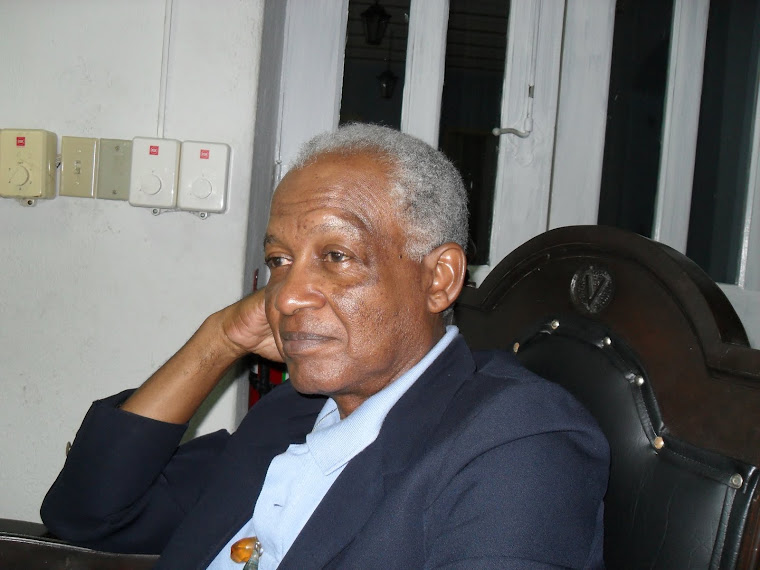
Blas JimenezA friend, translator, scholar and librarian Herbert R., recently sent word of the passing of one of the Dominican Republic's important poets, Blas Jiménez (at left), on November 13. One of the most stalwart expositors and champions of the DR's African heritage--90% of Dominicans have African ancestry, a higher percentage than almost every other country in the Americas except Haiti, Jamaica, and the predominantly Black Caribbean islands--Jiménez had a rich and varied career, as an award-winning journalist; essayist; professor at the Pontificia Universidad Catolica Madre y Maestra; TV producer and host of Página Abierta, radio producer and host of La Mañana en Antena; as Secretary General of the DR's national commission for the United Nations Organization for Education, Culture and Communication (UNESCO). For over a decade he worked at the International Education Resource Center, where he developed courses on Afro-Dominican and Caribbean culture and literature.

Amidst all of this great work, he was also and perhaps best known as a poet, and especially as a "poeta de negritud." His works include the volumes Aqui... Otro Español (Here...Another Spanish), Caribe Africano en Despertar (African Caribbean Waking Up), Exigencias de un Cimarrón (Exigiences of a Maroon), and El Nativo (The Native). With highly regarded scholars Silvio Torres-Saillant and Ramona Hernández, he co-edited the book Desde la Orilla: hacia una nacionalidad sin desalojos (From the Edge: Towards a Nationality Without Evictions). His death, as this very brief note makes clear, is a major loss for Dominican, Caribbean, and African Diasporic literature and culture.

Friday, November 20, 2009

iDrawings (New Batch)

How quickly the weeks whip past. I'll post more tomorrow, but in lieu of prose, here're are a few more iPhone drawings. I'm up to nearly 40; I have managed about 1 per day, all drawn from live subjects (=people), by thumb and index finger, the sketches preceding the filling in. A friend who's an artist thought that Elizabeth Peyton might be my inspiration, so I had to tell him that it has been, as I've mentioned here before, David Hockney. I've finally learned how to use the differing layers, despite years of working with Adobe Photoshop, and I even experimented with a real photo as a background; that image turned out to be a bit of a mess, so I'm holding off of more now. I may try a few caricatures, along the lines of the Sabathia image and the ones I used to do in high school--I should scan some of those in here just for the exercise--but for now, it's all electronic expressionism all the time.

Click on any for larger images.
Man on subway (iPhone drawing)
Man on subway (I must draw these quickly, since I only have 2 stops from 42nd St. to 23rd St. on the F or V, or 3 stops from Fulton to Grand Central terminal on the 5 or 6, and the latter train is always horribly crowded and people do not take kindly to being viewed intensely, another way of saying "ogled," even if for drawing purposes)
PATH riders (iPhone drawing)
Group portrait, on PATH (the first group drawing I've done)
Man on subway (iPhone drawing)
Man on PATH
Woman on subway (iPhone drawing)
Woman on PATH (she kept giving me death stares, as if to say, you had better NOT be taking my picture--and I wasn't)
Man on PATH (iPhone drawing)
Man on PATH (I don't think he ever noticed I was drawing him at all)
Man on PATH (iPhone drawing)
Man on light rail
Man on PATH (iPhone drawing)
Man on light rail