
Some weeks back, perhaps at the start of the new academic quarter when I had a smidgeon of time and was feeling thoughtful, I tweeted about a hypothetical situation which had struck me that day: what if instead of electing Democrat
Barack Obama in 2008 we had elected Republican
Colin Powell to the presidency, and how, in practical terms, would a Powell presidency be different?
What prompted me to ask this was a year's worth of reflection on
Obamatude, and how, in so many ways, instead of a true, clean break with the last administration, what we've gotten, and what's become a source of distress for many progressives and independents not bound by hero-worship of the President, is a continuation of the Bush's and the GOP's policies, just in slightly attenuated form. This thinned yet still toxic broth we're being served daily has led me to wonder where Obama, who ran as an agent of "change"--even if his own record hovered between post-partisan beliefs and neoliberal policies relabled as "pragmatism," and sometimes impressively progressive symbolism and rhetoric--has differed from what a counterfactual Powell administration might have looked like. Comparing the record of the real administration with the fictive one, I cannot see where there is much difference, except perhaps in the nomination of someone like
Supreme Court Associate Justice S
onia Sotomayor, though even in this instance, I would not have put it past Powell, with a nominally Democratic Congress, to make such a symbolic, if politically risky, move.

Let me begin by saying that I was happy that
Barack Obama and
Joe Biden defeated
John McCain and
Sarah Palin in
November 2008. Like many Americans, and almost every black person, American or otherwise that I know, I continue to be both amazed and proud that we now have an
African-American president in the White House. I am also proud of my fellow Americans for making this choice. In terms of Obama's first year of governance, I do not agree that he hasn't accomplished some substantive things, but I continue to be disappointed that he has repeatedly backed away from pushing the status quo, that he will not make a more sustained public case for his policies or politics, that he will not push the Congress more to do the proper thing, and that he appears to be more effective as a symbol than as a leader. This, in a sense, is his great triumph so far: symbolic leadership. It led to the premature
Nobel Prize; it continues to garner him adulation in this country among elements of his base, as well as across the globe (and I saw this this year in
Cuba and
Italy); and it endows what leadership he does demonstrate with something extra, a value-added spark and cachet. I try never to forget the importance of this symbolic element of Obama's tenure, and am always urging that he use it
more. (Drew Westen's excellent piece on Obama explores this and related issues.)
That said, I have also thought about what it would have meant to elect a black Republican like Powell as president, and how Obama in some ways seems to be behaving as if he were one. As recently as 2000, before the taint of his ineffectual stint in the W Bush administration, Powell was arguably the most popular and electable--at least at the presidential level--major black political figure in the landscape. In many ways, one can draw parallels between Powell and Obama. Like Obama, he had black immigrant parentage (his mother and father were
Jamaicans); like Obama he married an African-American woman (from
Alabama in Powell's case); like Obama he grew up in a working-class milieu, and has passed through multiple levels of American society, though in Powell's case it was through the older method of the government, and specifically, the US military. Like Obama Powell is an effective speaker, possessed a palpable élan, and, before the
Iraq War debacle, projected leadership. Like Obama, Powell was inoffensive to large portions of the white population, and his politics, combined with his military background, gave an especial appeal that other black politicians or public figures interested in politics couldn't claim. Had he chosen to run and been elected in 2000, say, he would have become our first African-American president; had he chosen to run against Obama in 2008, he would still have claimed that mantle, and very well might have made it a closer election. Powell was and has been consistently silent about the extremists on the right, choosing instead to either ignore or conciliate them, much as Obama has done, to his detriment, but vocal about criticizing critics on the left. In so many ways, in fact, Obama is governing as if he
were Powell, though without the latter's confident approach to the military hierarchy or related matters, and in such a way that he now finds himself attacked both by the left AND the right, much as Powell was at the end of Bush's disastrous mess of a first term.

Take, for example, the economic policies under Obama. How do they differ from what a moderate Republican might have overseen? At every step, the administration, in collusion with the Democratic-controlled Congress, has taken steps that are friendly to business interests and less beneficial to the majority of Americans, the middle and working-classes and the poor.
Salon's Michael Lind has called it "corporate welfarism," as opposed to the sort of New New Dealism that many Americans were expecting. Obama reappointed the "libertarian Republican" Fed Chairman, Ben Bernanke, who presided over the worst economic collapse since the Great Depression. Most of Obama's economic advisors during the campaign came from the "Chicago School" of economics, and the current leadership includes people who accept the basic premises of Friedman, Becker, etc., the Reagan economic and political Revolution, and Clintonian neoliberalism. The only truly progressive economist in their midst works out of the Vice President's office. Obama continued the bank bailout plan initiated by George Bush, on terms that also continue to give away the financial store; his Treasury department seems to be an annex of Goldman Sachs and a department of J.P. Morgan Chase; his stimulus package--i.e., jobs bill--was watered down by centrist and conservative terms, undermined by unnecessary tax cuts, and has been less effective than it could have been; and his mortgage legislation, instead of forcing an effective revaluation of loan principals, instead ceded the power to the banks, wrapped in a net of bureaucracy, making it far less effective--it has been a bust--than it could have been, with the resultant effect that the housing market will continue to ail for some time to come. Indeed, whenever and wherever this administration has had the opportunity to intervene directly in some aspect of the economic turnaround vs. negotiating and then handing power to a middleman, using our tax dollars, they have chosen the latter. Given Powell's moderate instincts vs. outright Hooverism, is there any sense that he would have behaved differently, especially with a Democratic Congress in power?
Then there are the military policies. Obama has not withdrawn the troops from
Iraq as he promised, and instead of winding down the war in
Afghanistan, he has instead pushed through
two surges, with attendant war funding. He claims that the US government does not torture, but allegations of torture continue from
Guantánamo, which he promised to shutter, yet which is still operating. He has pressed for no investigations of the prior administration's lies, war crimes, or corrupt accounting. He continues to permit
Blackwater/XE to work with US intelligence agencies. He is permitting drone attacks in
Pakistan--in fact, he made this a centerpiece of his campaign--and is launching them in
Yemen. He continues military aid to "anti-Islamicists" in
Somalia, and the US-proxy
Ethiopian forces, and is underwriting ongoing military aid to the right-wing government in
Colombia. On top of this, he did almost nothing beyond issue mild condemnation of the military coup in Honduras. He has even backed away--or is at least being vaguer--about his mild approach to the
Israeli settlements, and has said nothing publicly about the Bush administration's failed policies and alleged attempted coup in Gaza that has created incredible suffering for Palestinians living there. And then there is the abomination of
Don't Ask, Don't Tell. How, can anyone tell me, does this differ from what Colin Powell, a militarist Republican, might have done?

On civil liberties, we continue with a milder form of Bushism, as opposed to a break. I have yet to see any public discussion, led by the President or his administration, or leading figures in the Congress, about the 8 years of
warrantless wiretapping (
illegal spying) on US citizens under Bush, which began in January 2001, yet could not stop the 9/11 attacks, the anthrax attacks, the
Shoe Bomber, the numerous terrorist attacks across the globe allegedly launched by
Al Qaeda, nor, most recently, another potentially tragic attack on the international and domestic airline system. (
Could someone in Congress EVER investigate and publicize what this illegal spying was for and why it began in January 2001? Is that too much to ask?) Indeed, Obama has repeatedly pushed to hide the Bush administration's crimes, arguing on behalf of the state secrets doctrine; has not suggested returning to the pre-Patriot Act FISA situation, but rather wants to keep the odious, invasive new laws in place; and has proposed an incoherent system of trying the alleged terrorists, with some going to federal courts, others being subjected to military courts, and others being kept in long-term detention, which is to say, as political prisoners without trial. Obama's and his administration's public rhetoric appears to take a different turn, but as Glenn Greenwald and others have noted, the noxious Bush-era systems continue. And I ask again, how would a Powell administration, led by someone who essentially agreed with Bush on most of these civil liberties issues, differ from what we've seen on Obama?
Then there are
LGBTQ issues. Again, wherever possible, Obama has been halting, timid, seemingly more concerned with symbolism and appearance over substance, unwilling to take public stands that might demonstrate an real belief in full equality, and some horrible missteps, such as the initial brief from his Justice Department that compared gay people to child molesters. Even with the
Matthew Shepard Act, which did pass, he was tight-lipped until the bill finally made it through Congress. There was no vocal advocacy, no sense from him of how important addressing the ongoing violence against gay people, ranging from bullying of children to murder of adults, really is. With
DADT, with the
Employment Non-Discrimation Act (ENDA), as with repealing the
Defense of Marriage Act (DOMA), it appears as though a hands-off approach is the one this administration feels it must take. All of this I would have expected from a Republican like Powell, but from Obama, it has been nothing short of disgusting.

Perhaps one area where Obama has differed is in the appointment of a few truly progressive individuals who would be out of place in a Powell (or any other likely Republican president's) administration.
Hilda Solís, the outspoken, progressive
Secretary of Labor, who has provoked extensive grumbling from the corporate sector, is one example; I cannot imagine Powell's advisors permitting, let alone him daring, to appoint someone as pro-worker and pro-labor as Solís. Perhaps another would be
Amanda Simpson, soon to be Senior Technical Advisor in the Bureau of Industry and Security, and the first transgender person to be appointed to an executive branch-level position. Again, the anti-gay and Christianist branches of the GOP, who have criticized Simpson's appointment, would be trying to string Powell up for such an appointment. Yet beside both of these nominations there is the case of
Office of Legal Counsel nominee
Dawn Johnsen, an outspoken critic of Bush's criminal actions; after being stalled by Republicans
for nearly a year, the administration did and said nothing to support her, the nomination lapsed, and she was only renominated, receiving support from GOP apostate A
rlen Spector this month. Yet the administration is still refusing to argue on behalf of someone who not only would be an excellent employee, but who would
boost their cred in the eyes of many frustrated supporters. While these nominations and appointments are worthy of celebration among many progressives, the critique remains that Obama hasn't gone
far enough, and has squandered his political capital in an attempt to curry favor with the obstructionist, nihilist GOP and placate his corporate funders. Powell, being a moderate, very likely would find himself in similar pincers, though he would have the Democratic Congress to run against, and they have done themselves no favors over the last year either. The health care reform bill, which became a health care industry giveaway, is proof of this, as is the watered down and now disintegrating financial reform effort. Under a Powell administration, I could not imagine bolder efforts on either front, and envision the former not occurring at all. (In fact, just this summer,
Powell counseled Obama to take baby steps.) Instead, we'd be muddling through with our horrid health care system, and watching Democrats silently twist themselves into knots to please Wall Street, while being rhetorically shredded by the GOP and their corporate allies.
Perhaps President Obama and Congressional leaders will wake up and figure out that dishwater W-Bushism mixed with distilled Clintonism--an approach I feared more than anything else, and which I would have expected under a moderate Republican, like Powell--will be his and the Democrats' undoing. If establishmentarian stenographers like the
New York Times's
Adam Nagourney are to be believed, however, the Democrats are drawing the exact
opposite lessons from their rising unpopularity. Instead of more social progressivism, more transparency, more direct and immediate relief for struggling and suffering Americans, and less warmongering, we have repeatedly gotten the opposite. Instead of telling Wall Street that with the bailouts come tough conditions, they are setting the terms; instead of sweeping clean the legacy of Reagonomics and neoliberalism, they have provided the framework for every step this administration has taken.
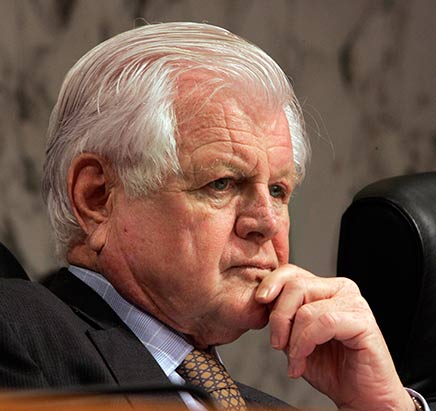
They are currently fretting over the potential loss of Teddy Kennedy's former Massachusetts Senate seat to a really far right-winger, anti-gay, anti-abortionist, pro-rape Birther sympathizer
Scott Brown, but they have created the conditions that are making this possible. Lackluster, milquetoast establishmentarian candidates, like
Martha Coakley, who offer dispassionate bromides and espouse corporatism and neoliberalism are not going to cut it, either with many on the left, or with the GOP, who will institute the same or worse policies, but with even greater pain on the middle-class and poor, but on their own terms. President Powell perhaps would have realized this but very likely would have remained silent and muddled through, as he did for the majority of his service under Bush. President Obama, who is currently in office, cannot and will not succeed if he continues to do so.
***
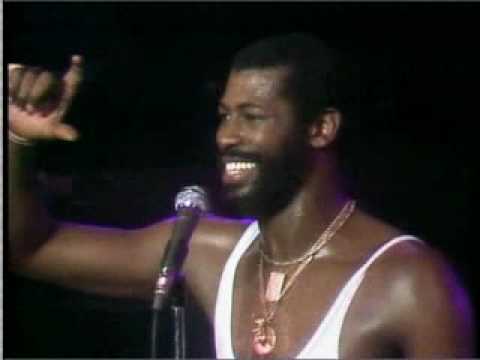
As is probably the case for many people growing up in inner-city America during the 1970s, the music of
Harold Melvin and the Blue Notes, and later on especially
Teddy Pendergrass, formed part of the musical soundtrack of my childhood and early teenage years. He was one of the supreme male crooners and sex symbols bar none (
Marvin Gaye and
Barry White would have been two of the other major ones), whose voice could seduce the bark off trees and the drawers, as I once heard someone say, off even proper church ladies; the stories of women tossing their panties at him as he sang on stage are legendary. While I loved his songs and his voice, especially "Love TKO," "Get Up, Get Down, Get Funky, Get Loose," and "Turn Off the Lights," the hypermasculinist image he projected felt like an admonition and a repudiation of who I felt myself becoming at the time, particularly at a moment when I was very unsure of my own sense of (not traditionally masculine adolescent) self, and I found it tough to reconcile my love of his music with the image he represented to and for me. What I was specifically struggling with was a sense that being a man, a straight black man, in part meant mirroring the sort of heterosexual dynamo that he appeared to be. It was therefore a shock, as it was perhaps to many others, when I heard about his disabling, tragic car crash, in
1982 (I was in high school then), in which he was paralyzed from the neck down, and the transsexual transvestite who was in the car with him. The crash shifted my perspective back to his music, which remains transcendant, and some of the most erotic soul every recorded, and my appreciation for his gifts grew to the extent that I was delighted when he returned to the stage after a gap of many years, to resume performing. This past week he passed away, at age 59, after suffering through colon cancer. As NPR reported recently, "Before his death, Pendergrass had co-written songs for the biographical musical production
I Am Who I Am: The Story of Teddy Pendergrass." His voice and songs remain with us.
EJ Flavors, the music man, has a wonderful
Teddy Pendergrass/Harold Melvin & the Blue Notes hits podcast.
***
Some of the rhetoric about Haiti's pre-earthquake state has been, to put it simply, ahistorical. There are reasons why Haiti is the poorest country in the
Western Hemisphere, and none of them are by accident. Chapter 8 of
Noam Chomsky's book
Year 501 is entitled "
The Tragedy of Haiti," and you can read it here for some background on the history of what had once been France's richest colony in the New World, a virtual mint, run by the blood and sweat of Africans, for the Bourbon and other dynasties and the bourgeoisie around them. Two paragraphs, in case you did not know this history:
The [Haitian] rebellion had broad consequences. It established British dominance of the Caribbean, and impelled its former colonies a long step further on their westward course as Napoleon, abandoning his hopes for an empire in the New World, sold the Louisiana territory to the United States. The rebel victory came at tremendous cost. Much of the agricultural wealth of the country was destroyed, along with perhaps a third of the population. The victory horrified Haiti's slave-holding neighbors, who backed France's claims for huge reparations, finally accepted in 1825 by Haiti's ruling elite, who recognized them to be a precondition for entry into the global market. The result was "decades of French domination of Haitian finance" with "a catastrophic effect on the new nation's delicate economy," Farmer observes. France then recognized Haiti, as did Britain in 1833. Simon Bolívar, whose struggles against Spanish rule were aided by the Haitian Republic on condition that he free slaves, refused to establish diplomatic relations with Haiti on becoming President of Greater Colombia, claiming that Haiti was "fomenting racial conflict" -- a refusal "typical of Haiti's welcome in a monolithically racist world," Farmer comments. Haitian elites continued to be haunted by fear of conquest and a renewal of slavery, a factor in their costly and destructive invasions of the Dominican Republic in the 1850s.
The US was the last major power to insist that Haiti be ostracized, recognizing it only in 1862. With the American Civil War underway, Haiti's liberation of slaves no longer posed a barrier to recognition; on the contrary, President Lincoln and others saw Haiti as a place that might absorb blacks induced to leave the United States (Liberia was recognized in the same year, in part for the same reason). Haitian ports were used for Union operations against the rebels. Haiti's strategic role in control of the Caribbean became increasingly important in US planning in later years, as Haiti became a plaything among the competing imperial powers. Meanwhile its ruling elite monopolized trade, while the peasant producers in the interior remained isolated from the outside world.
 So, Charlie Sheen is flipping out these days. If you haven't heard about it, all I can say is that I'm grateful that you came out from under your rock long enough to read this blog. You have priorities. I like that about you. And although he's still technically flipping out, he's calming down a bit from his peak of insanity. That was probably last week when he declared he was some sort of Vatican warlock who had something called tiger blood. He also said that dying was for losers and he wasn't going to be a part of it. OK, then.
  about a year ago at Christmas time that he held a knife to his wife's throat on Christmas. Just this last October, he trashed a hotel room and scared his hooker du jour so much that she ended up naked in a closet. (In his defense, he did think that she had stolen his watch. So, that, of course, justifies everything.) Then in January he ended up in the hospital after a weekend of partying with hookers. He claims to have had a 'hernia'. If that's what they're calling partying too much when you're 45 years old, so be it. Oh, and he just admitted during some interview the other day that he used to smoke seven gram rocks of cocaine by himself when he was partying. I don't know if that's a lot, but since he seems really proud of himself, I'm going to assume that it's a lot.
  about a year ago at Christmas time that he held a knife to his wife's throat on Christmas. Just this last October, he trashed a hotel room and scared his hooker du jour so much that she ended up naked in a closet. (In his defense, he did think that she had stolen his watch. So, that, of course, justifies everything.) Then in January he ended up in the hospital after a weekend of partying with hookers. He claims to have had a 'hernia'. If that's what they're calling partying too much when you're 45 years old, so be it. Oh, and he just admitted during some interview the other day that he used to smoke seven gram rocks of cocaine by himself when he was partying. I don't know if that's a lot, but since he seems really proud of himself, I'm going to assume that it's a lot.
  show, Two And A Half Men, has been shut down, his life is considerably tamer. Granted, he is living with two porn stars who he refers to as his 'goddesses'. But there doesn't seem to be any sort of drug use going on. That's because he asserts to have gone through his own 'home rehab' at his home (which, to my extreme delight, he has renamed "Sober Valley Lodge"). He's even passed a couple of whiz quizzes and he's clean as a whistle. So then why is it that just now, according to Pop Eater, "...major news organizations...have begun preparing obituaries for the unraveling-before-our-eyes star". What now?
  show, Two And A Half Men, has been shut down, his life is considerably tamer. Granted, he is living with two porn stars who he refers to as his 'goddesses'. But there doesn't seem to be any sort of drug use going on. That's because he asserts to have gone through his own 'home rehab' at his home (which, to my extreme delight, he has renamed "Sober Valley Lodge"). He's even passed a couple of whiz quizzes and he's clean as a whistle. So then why is it that just now, according to Pop Eater, "...major news organizations...have begun preparing obituaries for the unraveling-before-our-eyes star". What now?
  enough to have them start penning his life story? According to the article, a CBS insider is quoted as saying, "No one is wishing the worst but as a news organization for us not to be prepared for one of the biggest stories in a long time would be unprofessional." Well, of course no one is wishing the worst! (Then again, it is sort of like a train wreck that is inevitable and you kind of wish that it would just crash and get it over with. Sometimes, suspense is a real bitch. And that includes when you're waiting for someone else's death.) But if you're going to talk about needing to be prepared, shouldn't you have started on this thing quite some time ago! He's clean right now, for cryin' out loud!
  enough to have them start penning his life story? According to the article, a CBS insider is quoted as saying, "No one is wishing the worst but as a news organization for us not to be prepared for one of the biggest stories in a long time would be unprofessional." Well, of course no one is wishing the worst! (Then again, it is sort of like a train wreck that is inevitable and you kind of wish that it would just crash and get it over with. Sometimes, suspense is a real bitch. And that includes when you're waiting for someone else's death.) But if you're going to talk about needing to be prepared, shouldn't you have started on this thing quite some time ago! He's clean right now, for cryin' out loud!
  And look, while the news organizations may feel the need to be on a Charlie Sheen death watch, I don't see it happening anytime real soon. The guy parties like an animal. And for no real explainable reason, some people's bodies are just built to take that sort of abuse more than others. Look at Keith Richards. Why is that man still alive? How is that man still alive?! If there is ever a nuclear war, there will be two things that survive: Cockroaches and Keith Richards. (And quite frankly, the two are a little bit indiscernible right about now.) And that's just how it goes. But again, I feel the need to point out that he's not doing drugs right now! Where were your obituaries when he was smoking those seven gram rocks! Sure, it's great to be prepared, but you need to have something to be prepared for! And right now, that ship has sailed (and it probably has lots of porn stars aboard).




 Today on the CC list, I saw a message from