Showing posts with label neoliberalism. Show all posts

Monday, September 6, 2010

Happy Labor Day + Benn Michaels, "The End of Boom Culture" & Contemporary American Fiction

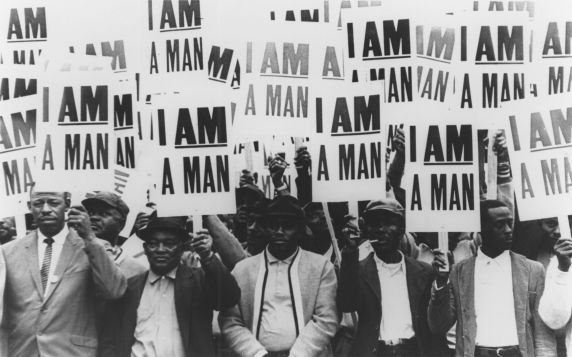
Happy Labor Day, readers.  Or should I say, let's all hope for happier labor days to come soon. 128 years after the first U.S. Labor Day was celebrated in New York City, the position of American workers, especially blue-collar workers, is precarious. As I need not tell any readers of this blog, 2 years ago the country began suffering its worst economic calamity since the Great Depression, the result of decades of terrible economic and political policies, from rampant deregulation and laissez-faire-ism to crony capitalism and supply-side tax policies that cumulatively undermined the foundations of the national and global economies.

Over this period the gap between wealth of those at the top of the US economic ladder and those at the bottom has widened to oceanic proportions; labor unions are at their weakest levels of influence and workers not in top management positions are in their most tenuous state in the last 100 years; the Supreme Court has taken an aggressively pro-business viewpoint in its rulings, most recently in the Citizens United vs. Federal Election Commission; and both major political parties have increasingly legislated in favor of the richest and corporations, and have ignored and even demonized the needs of the poor and working-classes.  Today, in a country built by labor, we face 9.7% official unemployment (and upwards of 16% unofficially), with the already poor, black and latino men, undocumented immigrants, and younger workers disparately and negatively affected.

After the White House pushed and Congressional Democrats further trimmed an inadequate stimulus/jobs bill package in 2009, against the recommendations of some of the nation's top economists, the administration and Democratic leaders in the House and Senate did not sustain an argument on behalf of the evident but limited successes of this bill, or the need for more additional stimulus funds to create jobs in the short term and strengthen our national infrastructure for economic success in the future. Even with the historical backdrop of failed Hooverism and FDR's example, they have often seemed to be more concerned with and cowed by the Wall Street barons, who were bailed out on the backs of millions of everyday Americans. In addition, the White House and Democrats have been reluctant, grossly so, in pointing out how the economic, political and ideological approaches of the Republicans led to this disaste. Because of this silence, this void, right-wing populists, funded by the likes of libertarian billionaires, have filled the gulf, leading to the sort of Orwellian-palooza on display a week ago at the Beck rally in Washington. The tangible results are a potential November electoral sweep by the Right and few real gains for the average worker.

On tonight's PBS Newshour with Jim Lehrer, there was a segment (not online yet) focusing on the struggles of the Retail, Wholesale, and Department Store Union International (RWDSU) workers at the Mott's apple sauce plant in upstate New York. Dr. Pepper Snapple Group, Inc., despite rising profits and burgeoning sales, tried to force the 305 workers at its Mott's subsidiary near Rochester, New York, to take a $1.50/hr wage cut, and reduced benefits. The RWDSU workers stood their ground, and since then, Dr. Pepper Snapple Group, Inc. has also not budged, hiring temporary replacement worker at far lower wages, and pocketing the difference.  The CEO, meanwhile, is making well over $6.5 million per year, more than most workers at the plant or any plant in the US or anywhere else would earn in several lifetimes. On The Newshour, the Dr. Pepper spokesperson not only complained that the Mott's workers were paid more than prevailing wages in the area, and repeatedly cited "competitive[ness]" as the reason to stiff them, but without a bit of irony mocked the fact that forklift drivers at the plant earned $20/hr., averaging out to $41,600/year.  (The report noted that replacement forklift drivers were earning far less than this, or about $9/hr.)  Yet when asked about the CEO's high salary, and the gains by executives, the company spokesman claimed that was a side issue! Meanwhile, the union workers are still not working, and because of the high unemployment rate, desperate temporary replacement workers are readily taking their jobs.

Similar conditions exist all over the US. Corporate profits are up, and many companies are sitting on their cash; for them, as for economists, the Great Recession has "officially" ended. Yet they are not hiring, and the country is not creating enough jobs, especially decent-paying jobs, fast enough.  Beyond the potential wipeout of the Democrats, the disillusionment of their base, the exasperation of progressives, we shouldn't forget that the people likely to gain power could care even less about average workers--they held up renewing unemployment payments without blinking an eye--than the people currently in power.

If you do think about workers today, think also about how you--we all--might improve the situation for the majority of us.  Are corporate profits, which for years now haven't accrued to workers and sometimes not even to shareholders, and megasalaries for CEOs and upper management, the ultimate sum and goal of what companies exist to do in the world? Do workers, and the communities they--we--belong to, communities here in the US, no longer matter? Is capitalism, as we know it today, as it's operated in its neoliberal and libertarian forms for several decades, insufficient for the world we live in now? Doesn't "society" exist, and if so, how can ensure that it operates not just for the richest few, but for the many--the majority of us?


(Meanwhile, one of the main stories on the front pages of the local newspapers and local TV stations is the signing of New York Jet cornerback Darrelle Revis, who will be earning around $48 million over the next four years...yikes!)

[All photos, from Labor History Links Chronological Sites]

===

Labor also has me thinking about something else. Over a year ago, University of Illinois-Chicago professor Walter Benn Michaels published a provocative short essay in the February/March 2009 Bookforum, entitled "Going Boom." In it he discussed the economic collapse of 2008-9 (and I'd argue 2007-2010 and counting), or in his words, the arrival of a historical, economic and briefly political moment that was "bad for markets" and which upended what was a 25-year economic bonanza only for the rich few.  Benn Michaels thought this vanished "boom," which had gone boom for those who'd been its primary beneficiaries, might lead to the ideological struggle that not only not occurred in the streets and cul-de-sacs of America, but which had also not been portrayed in the American novels of this period.

Instead, argued Benn Michaels, during this period, a different sort of novel had prevailed.  Citing Toni Morrison's Beloved (1987) as a chief example, he argued that instead of addressing the current economic and political crisis, and what made it possible, most of the major and most highly praised American novelists over the past 25 years had turned to historicity, particularly where it intersected with identity politics, and were reflecting, if their works treated contemporary topics at all, the rampant neoliberalism and free-market ideology that had brought us to this precipice.  Emblematic of this was the rise of personal memoirs, which have tended to turn on individual consciousness and perspectives, often refracting every life event through the prism of affective struggles, thus reflecting yet again the broader neoliberal ethos.

In contrast to these types of works, Benn Michaels extolled several counterexamples, such as Bret Easton Ellis's critically reviled but popular novel American Psycho (1991) and David Simon's HBO series The Wire (2002-8). For the novels of today, he suggested the following changes:

So—no memoirs, no historicist novels, what else? Actually, a lot of other novels will have to go, too. The end of the novel is sort of like the weather, people are always talking about it . . . but maybe this time, we’ll get some results. For sure, no more books like The Corrections, or any of Oprah’s other choices. And no more stories about the children of immigrants, trying to figure out whether and where they fit into American culture. Ethnic identity is just the family writ large, and no move is more characteristic of the neoliberal novel than the substitution of cultural difference for (one of the things Thatcher meant to deny) class difference. What the neoliberal novel likes about cultural difference is that it sentimentalizes social conflict, imagining that what people really want is respect for their otherness rather than money for their mortgages. But they don’t. You get a better sense of the actual structure of American society from any of Ellis’s famous descriptions of what people are wearing (“a suit by Lubiam, a great-looking striped spread-collar cotton shirt from Burberry, a silk tie by Resikeio and a belt from Ralph Lauren”) than you do from all the accounts of people reclaiming, refusing, or repurposing their cultural identities.
And you get an even better sense of it from something that’s not a novel at all, the TV series The Wire, the most serious and ambitious fictional narrative of the twenty-first century so far. Unlike its more widely watched competitor The Sopranos (which really is about what David Chase always said it is about—“family”), The Wire is about institutions—unions, schools, political parties, gangs. It’s about the world neoliberalism has actually produced rather than the world our literature pretends it has. If American Psycho harks back to the great novels of Edith Wharton—novels of manners in which the hierarchy of the social order is always what’s at stake—The Wire is like a reinvention of Zola or Dreiser for a world in which the deification of the market is going out rather than coming in. Although, of course, you had to pay the HBO subscription fee to watch it.

Benn Michaels later elaborated on this in his April 2009 New York Public Library conversation with Simon, and authors Susan Straight and Dale Peck. (Unfortunately, given Benn Michaels' longstanding take on race and his critiques of Morrison and contemporary literature on slavery and immigration, no black, latino or first-generation immigrant writers, of whom there are many in New York City, was part of this conversation).  While I agree to some degree with Benn Michaels about the paucity of novels dealing with the larger economic and political forces over the last few years--though I think he overlooks other works that do what he's suggesting--I also feel that he underplays the ways in which explorations of history, and of slavery in particular, by their very nature must treat economic and political questions, and the systems that put them in place. (This occurs in both Beloved and A Mercy, as it does in The Known World, in a number of works on the Holocaust, and so on.)  Benn Michaels has argued for years that the focus on race subsumes a discussion of class, but addressing the former need not cancel out the latter, and in the US race is often a proxy for class, and vice versa. In the broader public sphere, in 2010, when pundits speak of poor people, for example, their examples are often poor black or latino people, rather than poor whites, who constitute the majority of the poor and working classes in this country.  Narratives of family also need not cancel out questions of the larger economic forces at play all around us, and the same is true of immigration.  

Quite telling for me also in the NYPL conversation was the fact that aesthetics, in terms of form and literary quality, appeared to have far less bearing for Benn Michaels that ideological and political value. I personally do find literary merit in Bret Easton Ellis's work, but in terms of quality, Theodore Dreiser, while important in terms of ideas, is a drudge to read. (If you have read Sister Carrie, you know what I mean.)  Nevertheless, the article really got me thinking about a lot of things, among them how the literary system (undergraduate and graduate literary studies and writing programs, the commercial publishing industry, the literary media, etc.) validate certain kinds of literary texts, particularly fiction and creative nonfiction, while ignoring or offering only glances to others, and how, to a great degree, the ideological labor that Benn Michaels has pushed for has been taken up by the  avant-garde poetry world, or some sizable segments of it (cf. the Columbia conference I wrote about earlier this summer).  Many of Benn Michaels' arguments and his emphasis on ideological readings could easily be made on behalf of the work of a good number of poets. I also thought today, though, that far fewer people will be reading those poets than, say, Jonathan Franzen's Freedom, the literary sensation of the moment. And so it goes....


Sunday, September 5, 2010

September It Is + Abolishing Tenure? + Warburg Institute Woes

Now that Labor Day is upon us I'm finally returning from my little blog hiatus. As I mentioned back at the beginning of August, I had a number of blog-post stubs from July that I needed to finish, but I ended up devoting my energies to other things for most of this month, so I ended up reconstituting most of them into the photo spreads that precede today's entry.  Out of necessity my focus has turned to the upcoming school year, which begins in a few weeks. I have two courses, a graduate fiction workshop and an undergraduate African-American literature class, both of which I'm excited about, and several graduate and undergraduate advisees that I've been working with. Things are humming along.  I'm not, however, looking forward to the seasonal, geographical uprooting.  But such is life. On to the rest of this post....

+++

Continuing on the higher educational theme, I've seen several different articles and blogposts over the past year on the topic of academic tenure and its possible tweaking or abolition, and have been meaning at the very least to point to them on here, but then I came across Christopher Shea's essay in today's New York Times, which revisits the issue in a brief discussion of two books.  One is Higher Education? How Colleges Are Wasting Our Money and Failing Our Kids — And What We Can Do About It (Times Books, 2010), by Queens College emeritus professor Andrew Hacker and journalist Claudia Dreifus, the other Crisis on Campus: A Bold Plan for Reforming Our Colleges and Universities (Knopf, 2010) by Mark C. Taylor, a professor of religion at Columbia University.

I admit not to having read either of these two books, though I have followed Andrew Hacker's work for years, and have often found his arguments on higher education illuminating and persuasive, and I did read Mark Taylor's previous, above-linked New York Times piece, that Shea cites, "End the University As We Know It." I thought it unnecessarily outrageous.  In both cases, I will take Shea's word about the arguments of each book, which in Hacker's and Dreifus's case range from getting universities out of the research business altogether and focusing on teaching, to Taylor's push for greater cooperation with business and use of "efficiency-enhancing technologies" (the Internet?). Nothing that new in either case, really. Both, it appears, also believe that tenure, as it's currently constituted, ought to be abolished, and Shea points out that rather than coming from conservative critics, in the cases of Hacker and Taylor, both are ideologically on the left.

It's hardly news that critics from the right have long assailed universities, targeting above all the liberalism of the professoriate, and have sought ways to curb professors' and more broadly, academe's influence, not just in education but in society and the public sphere.  It may be news, however, to some that to a great degree they have succeeded, as the debates around climate change and global warming, to take just one and very pressing topic, demonstrate.  From the creation of parallel quasi-academic institutions and "think tanks" to media campaigns to undermine professionalized knowledge and expertise, Glenn Beck's "University" being a ridiculous but salient example, figures and institutions on the right have exploited not only widespread ignorance, class resentment, and the power of money, via mass media, to shape public perceptions, but also the US's long-standing anti-intellectual tradition.  Even still, there is the pesky problem of resistent academics being ensconced in their positions. You can create all kinds of pseudo-science you want, generate non-scandals that tie the media in knots about emails, and so forth, but you still have tenured (and tenure-track) atmospheric chemists and meteorologists, for example, who can conduct studies that establish rather conclusively that man-made climate change is occurring.  Abolishing tenure, and the security for (dissident and oppositional) scholars and scholarship that usually but not always comes with them, would thus mark a particular coup. 

I'd suggest that if Hacker and Dreifus think that tenure prevents new forms of knowledge from emerging (an estimation I find based on my personal experience not be grounded in reality), just imagine what would happen if people in academe felt that they had little to no security, not just economic, but ideological and political, whatsoever to do their work? As things go, the situation is already difficult for scholars and artists who do not have real job security, and present work that might be politically charged or difficult.  Moreover, given the now dominant economic utility model in American higher education, certain fields of inquiry at many institutions may be completely foreclosed.  An atmospheric chemist might be able to make a convincing argument to deans, the provost, a college's president and trustees, about the economic utility of her work, and may be able to secure if not government funding, then corporate or private foundation support. But what about someone who is studying non-extant Native American languages of northern Canada? Or the relationship between iconography, public culture, and the emergence of statehood in early European slavery-era Africa? Or writing a play and a commentary on it? Or, imagine then if everyone in academe were in this boat: if there were every incentive not to study topics with more immediate social, if not economic utility (though I would argue they are there), such as the complex roots of the widespread violence that broke out in late 1960s urban America, say, or the potential carcinogenic effects of formaldehyde, only a brave (and financially independent) few might dare do it, if at all, and would include at the sorts of financially-dependent institutes and research centers that Hacker and Dreifus are calling for. 

Critics on the left other than Hacker, Dreifus and Taylor have conversely critiqued the increasing corporatization of universities and colleges, and the neoliberal ethos that higher education, like other systems adopted throughout the rest of the West.  The corporatization of the University of California system led to strikes and protests last year, which were mirrored at a number of other American private and public universities, and a similar move, based on the Bologna Declaration of 1999 "reform" model, led to protests at German and Austrian universities.  Some left critics have also noted how higher educational institutions, especially the richer ones, have not changed as quickly in terms of their institutional structures, nor created opportunities for new generations of scholars, many of whom find themselves in serious debt after years of study, and with few prospects. To some extent this is laid at the doorstep of the tenure system. Although we have witnessed the effects of deregulation and an almost religious belief in the (not truly) "free market," which resulted in a global financial near-collapse, neoliberalism, the rhetoric of choice and individualism, and the idea that an ideal(ized) (yet-unrealized) capitalistic business model maps well onto higher education continues apace.  If I read Shea's reading of Taylor correctly, this is what he's arguing; but then what about institutions like the University of California system, where, as I noted, the corporatized model is having problematic effects on the educational experiences of all, save those at the very top?  What about the many public institutions that have seen sharp drops in funding, leading to the elimination or consolidation of departments and programs, which has meant not only the loss of majors and classes for their students, who are nevertheless enrolling at such institutions at higher numbers because of cost considerations, leading to a diminished educational experience and potentially also to losses in possibly vital forms and modes of knowledge? I am not suggesting that institutions of higher education do not have to keep an eye on their financial ledgers, but the idea that every department or program should represent a profit center or be subjected to market forces is highly problematic too. What is college for, what are universities for, what are the roles of teachers and students at and in them?

Shea's piece is ultimately is less about changes in the tenure system and more about the growing inequalities between institutions and their stakeholders, especially teachers and students.  Abolishing or limiting tenure--as Bennington has done, yet it remains one of the most expensive colleges in the US--is not going to resolve many of the issues at the core of the crises American higher education is facing, but calling for it does seem, at least from the preponderance of these articles, to be increasingly popular now.  I would only say to anyone who hasn't thought through the ramifications: beware!

(Bookforum's Omnivore blog devotes an entire post, full of links, to discussions on "the bonfire of the universities." Read it and...weep?)

===

On yet another related note, on the New York Review of Books' Blog scholars Anthony Grafton and Jeffrey Hamburger call attention to the threat the esteemed and incomparable Warburg Institute at the University of London is facing as the University, the largest in the UK and one of Britain's leading academic institutions, finds itself under increasing financial stress because of years of declining support and an increasingly corporate model imposed by both Labour and the Conservative governments over the last 35 years.

The University, which controls the Institute's funds, has since 2007 requested "'economic' space rental charges" of the Institute, which it cannot afford, and, according to Grafton and Hamburger, is considering as a solution the dispersal of the priceless library and archive (the "Mnemosyne-Atlas" 1924-29, above left, mediaartnet.org) that historian and theorist of art and culture Aby Warburg (1866-1929) had initially assembled, in his native Hamburg.  This library and archive constituted the heart of the Kulturwissenschaftliche Bibliothek Warburg in 1921, which in turn became affiliated with the University of Hamburg, moved to London after the Nazi takeover in 1933, was incorporated into the University of London in 1944, and became a founding institute of that university's School of Advanced Study in 1994.  Among the institute's former scholars, fellows and students, in Germany and the UK, number some of the illustrious figures in Western intellectual thought, in addition to Warburg, Erwin Panofsky, Ernst Cassirer, Fritz Saxl, E. H. Gombrich, Arnaldo Momigliano, Frances Yates, Michael Baxandall, Charles Saumarez Smith, Giorgio Agamben, and Grafton himself.

Ironically, Grafton and Hamburger believe that returning the Warburg Institute (at right, Wikipedia) to Germany might indeed save it as it's current constituted, though I wonder if they're being too hopeful in that regard.  As The Economist's September 2, 2010 article "Germany's mediocre universities: on shaky foundations" argues, German higher education isn't in the best state right now either. (It's behind a firewall.)  This entire situation unfortunately underlines the point I made earlier, about what universities and colleges, but especially ones dependent upon public funds, including highly ranked ones such as the University of London, are facing these days.

While I sincerely hope that Warburg Institute can and does stay in London, one of the world capitals of the study and practice of fine arts, as an integral part of a major public institution, I had to wonder how long might it be, if worse came to worst in terms of British funding, before some enterprising faculty and administrators, supported by wealthy donors, moved it to one of the richer private universities in the United States? Will it come to that?

Thursday, June 24, 2010

Quote: Pierre Bourdieu

The essence of neoliberalism

"And yet the world is there, with the immediately visible effects of the implementation of the great neoliberal utopia: not only the poverty of an increasingly large segment of the most economically advanced societies, the extraordinary growth in income differences, the progressive disappearance of autonomous universes of cultural production, such as film, publishing, etc. through the intrusive imposition of commercial values, but also and above all two major trends. First is the destruction of all the collective institutions capable of counteracting the effects of the infernal machine, primarily those of the state, repository of all of the universal values associated with the idea of the public realm. Second is the imposition everywhere, in the upper spheres of the economy and the state as at the heart of corporations, of that sort of moral Darwinism that, with the cult of the winner, schooled in higher mathematics and bungee jumping, institutes the struggle of all against all and cynicism as the norm of all action and behaviour."

-Pierre Bourdieu, from "The Essence of Neoliberalism", Le Monde, December 1998

(h/t to Marc Garrett, via iDC)