
Over this period the gap between wealth of those at the top of the US economic ladder and those at the bottom has widened to oceanic proportions; labor unions are at their weakest levels of influence and workers not in top management positions are in their most tenuous state in the last 100 years; the Supreme Court has taken an aggressively pro-business viewpoint in its rulings, most recently in the Citizens United vs. Federal Election Commission; and both major political parties have increasingly legislated in favor of the richest and corporations, and have ignored and even demonized the needs of the poor and working-classes. Today, in a country built by labor, we face 9.7% official unemployment (and upwards of 16% unofficially), with the already poor, black and latino men, undocumented immigrants, and younger workers disparately and negatively affected.
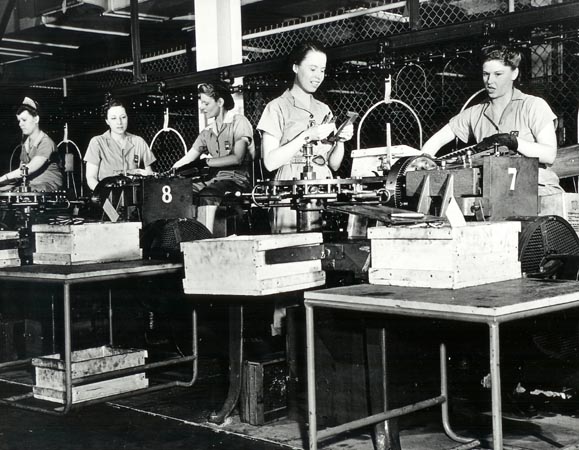
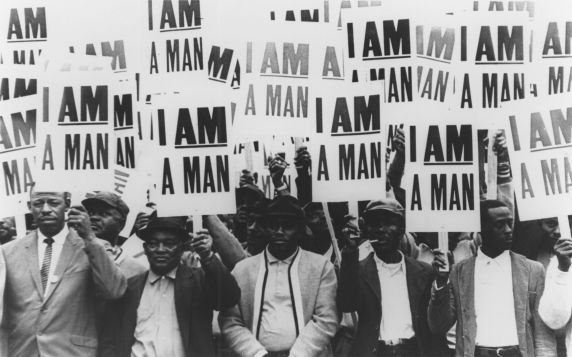
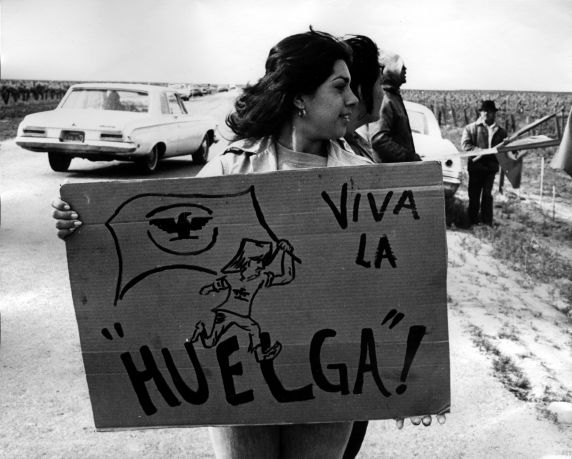
If you do think about workers today, think also about how you--we all--might improve the situation for the majority of us. Are corporate profits, which for years now haven't accrued to workers and sometimes not even to shareholders, and megasalaries for CEOs and upper management, the ultimate sum and goal of what companies exist to do in the world? Do workers, and the communities they--we--belong to, communities here in the US, no longer matter? Is capitalism, as we know it today, as it's operated in its neoliberal and libertarian forms for several decades, insufficient for the world we live in now? Doesn't "society" exist, and if so, how can ensure that it operates not just for the richest few, but for the many--the majority of us?
(Meanwhile, one of the main stories on the front pages of the local newspapers and local TV stations is the signing of New York Jet cornerback Darrelle Revis, who will be earning around $48 million over the next four years...yikes!)
[All photos, from Labor History Links Chronological Sites]
===

Instead, argued Benn Michaels, during this period, a different sort of novel had prevailed. Citing Toni Morrison's Beloved (1987) as a chief example, he argued that instead of addressing the current economic and political crisis, and what made it possible, most of the major and most highly praised American novelists over the past 25 years had turned to historicity, particularly where it intersected with identity politics, and were reflecting, if their works treated contemporary topics at all, the rampant neoliberalism and free-market ideology that had brought us to this precipice. Emblematic of this was the rise of personal memoirs, which have tended to turn on individual consciousness and perspectives, often refracting every life event through the prism of affective struggles, thus reflecting yet again the broader neoliberal ethos.
In contrast to these types of works, Benn Michaels extolled several counterexamples, such as Bret Easton Ellis's critically reviled but popular novel American Psycho (1991) and David Simon's HBO series The Wire (2002-8). For the novels of today, he suggested the following changes:
So—no memoirs, no historicist novels, what else? Actually, a lot of other novels will have to go, too. The end of the novel is sort of like the weather, people are always talking about it . . . but maybe this time, we’ll get some results. For sure, no more books like The Corrections, or any of Oprah’s other choices. And no more stories about the children of immigrants, trying to figure out whether and where they fit into American culture. Ethnic identity is just the family writ large, and no move is more characteristic of the neoliberal novel than the substitution of cultural difference for (one of the things Thatcher meant to deny) class difference. What the neoliberal novel likes about cultural difference is that it sentimentalizes social conflict, imagining that what people really want is respect for their otherness rather than money for their mortgages. But they don’t. You get a better sense of the actual structure of American society from any of Ellis’s famous descriptions of what people are wearing (“a suit by Lubiam, a great-looking striped spread-collar cotton shirt from Burberry, a silk tie by Resikeio and a belt from Ralph Lauren”) than you do from all the accounts of people reclaiming, refusing, or repurposing their cultural identities.
And you get an even better sense of it from something that’s not a novel at all, the TV series The Wire, the most serious and ambitious fictional narrative of the twenty-first century so far. Unlike its more widely watched competitor The Sopranos (which really is about what David Chase always said it is about—“family”), The Wire is about institutions—unions, schools, political parties, gangs. It’s about the world neoliberalism has actually produced rather than the world our literature pretends it has. If American Psycho harks back to the great novels of Edith Wharton—novels of manners in which the hierarchy of the social order is always what’s at stake—The Wire is like a reinvention of Zola or Dreiser for a world in which the deification of the market is going out rather than coming in. Although, of course, you had to pay the HBO subscription fee to watch it.
Benn Michaels later elaborated on this in his April 2009 New York Public Library conversation with Simon, and authors Susan Straight and Dale Peck. (Unfortunately, given Benn Michaels' longstanding take on race and his critiques of Morrison and contemporary literature on slavery and immigration, no black, latino or first-generation immigrant writers, of whom there are many in New York City, was part of this conversation). While I agree to some degree with Benn Michaels about the paucity of novels dealing with the larger economic and political forces over the last few years--though I think he overlooks other works that do what he's suggesting--I also feel that he underplays the ways in which explorations of history, and of slavery in particular, by their very nature must treat economic and political questions, and the systems that put them in place. (This occurs in both Beloved and A Mercy, as it does in The Known World, in a number of works on the Holocaust, and so on.) Benn Michaels has argued for years that the focus on race subsumes a discussion of class, but addressing the former need not cancel out the latter, and in the US race is often a proxy for class, and vice versa. In the broader public sphere, in 2010, when pundits speak of poor people, for example, their examples are often poor black or latino people, rather than poor whites, who constitute the majority of the poor and working classes in this country. Narratives of family also need not cancel out questions of the larger economic forces at play all around us, and the same is true of immigration.
Quite telling for me also in the NYPL conversation was the fact that aesthetics, in terms of form and literary quality, appeared to have far less bearing for Benn Michaels that ideological and political value. I personally do find literary merit in Bret Easton Ellis's work, but in terms of quality, Theodore Dreiser, while important in terms of ideas, is a drudge to read. (If you have read Sister Carrie, you know what I mean.) Nevertheless, the article really got me thinking about a lot of things, among them how the literary system (undergraduate and graduate literary studies and writing programs, the commercial publishing industry, the literary media, etc.) validate certain kinds of literary texts, particularly fiction and creative nonfiction, while ignoring or offering only glances to others, and how, to a great degree, the ideological labor that Benn Michaels has pushed for has been taken up by the avant-garde poetry world, or some sizable segments of it (cf. the Columbia conference I wrote about earlier this summer). Many of Benn Michaels' arguments and his emphasis on ideological readings could easily be made on behalf of the work of a good number of poets. I also thought today, though, that far fewer people will be reading those poets than, say, Jonathan Franzen's Freedom, the literary sensation of the moment. And so it goes....

 The news on the unemployment front, like a great deal of what we read and see on TV, has been growing grimmer by the day, and the social conditions behind it are certainly grimmer still. Several people I know well, friends and relatives, have lost their jobs, and others are struggling to make ends meet. Alongside the weak job market, other signs of the economy's sickness are evident everywhere: plummeting home values and rising foreclosures; the appearance of Bushvilles; the collapse of the commercial real estate market; personal bankruptcies resulting from people's inability to pay debts; and on and on. These are only a portion of of the social crisis the country faces, and conditions are as bad or worse overseas. We're officially at 8.9% unemployment, though the reality is probably far worse, which is the worst things have been since the recessionary period around 1983. That was the year I graduated from high school, and one of the reasons I'm able to look back on that period without nostalgia is because, despite my fond memories of particular aspects of being 17 and 18 years old, my perception of the national situation was clear-eyed. In case you don't recall, in 1983 the ur-right winger, Ronald Reagan, was in office; a claque of extreme conservatives were frothing in their new government positions; the Cold War still raged; the AIDS pandemic was steadily increasing, with little attention for the federal government; the crack epidemic was picking up steam, and the concomitant drug war and buildup of the penal system were underway; the US was meddling in a war in Iraq (against Iran, no less, while secretly funneling money from Iran to right-wingers in Central America); and on and on. While I, though penniless and the child of a working-class background, was heading off to college and what I hoped would be a decent future, I was quite aware that things were terrible for others. The lack of jobs, particular for the poor and working-class, for black people, for Latinos, for undereducated whites, was a pressing national concern, which the GOP exploited brilliantly. It would be 10 more years and another recession (along with a young and conservative Democratic president) before the country really turned around. I hope it does not take that long this time, though the underlying conditions do appear to be worse than they were in 1983, or 1993.
