Showing posts with label novella. Show all posts

Friday, August 6, 2010

Espresso Book Machining with DR's Prez + The Novella Is Back

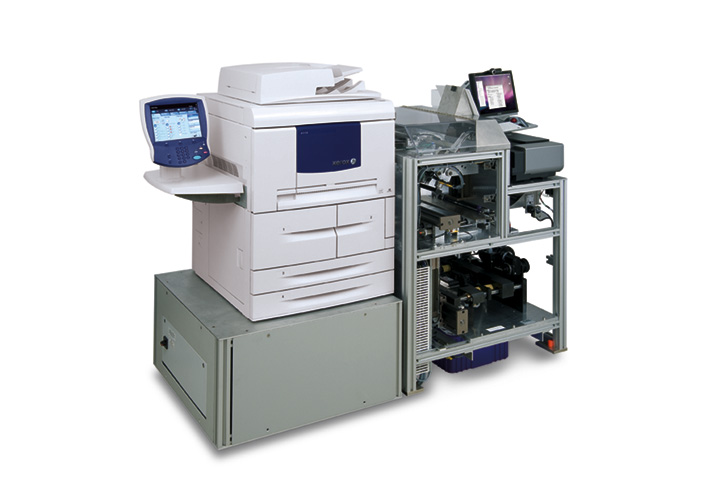
On the web, it's a truism that one thing leads to another...and so, somehow or other, I ended up at the Harvard Crimson website, and came across this brief video interview, on the Crimson's FlyBy blog, with Leonel Fernández Reyna, the President of the Dominican Republic, who was visiting the US a month ago, and happened to stop at the Harvard Book Store to, as he said, load up on books, particularly nonfiction ones. While there, he got to see an Espresso Book Machine (EBM), this one named Paige Gutenborg after its Fall 2009 rollout, in action.


I've been waiting to see and try out one of these print-on-demand machines, another option in the transforming book world, since I first read about it Joseph Epstein's book The Book Business a few years ago. According to Adrian Versteegh's article in the March/April 2010 Poets & Writers, Epstein and Dane Neller co-founded of the New York-based company that debuted the EBM four years ago, and the company

has entered partnerships with the Open Content Alliance, Lightning Source, and Google Books, giving users access to over three million titles, both proprietary and public domain. The "ATM for books," as Neller describes their device, has so far been installed at about twenty-eight locations throughout North America, Australia, the United Kingdom, and Africa, including the University of Michigan, McGill University, and the University of Melbourne. On Demand expects the EBM—which sells for slightly over a hundred thousand dollars, depending on the choice of printer—to have found its way into at least forty independent bookstores by the second quarter of 2010. 

Versteegh notes that so far, universities and their presses, and self-publishing authors have been the major users of such machines, but sales have been low, and for the vanity system, a stigma remains. (As the large, traditional publishing conglomerates vanish, how much longer will this be case?) He adds that most of the books produced by these machines aren't in bookstores, and most readers are encountering POD-ready books online, via Amazon and online publishing organs like Lulu and iUniverse, though given that this is increasingly the way most readers, especially in the US, are coming into contact with books. If more of these machines and databases featuring out-of-print, hard-to-find and rare but desired books become available, it would be a boon for writers and publishers, especially those that focus on the "long tail" approach. Another way of looking at such machines is that a book never need go out of print now, and, should one not have access to an e-reader and want a print book, one can hold one in no time.

Speaking of bookstores, Barnes & Noble, the largest bricks-and-mortar book retailer, is planning to hock itself. With the rise of online bookselling and the popularity of e-readers like the Kindle and the iPad's iBook app, I figured this was coming sooner or later. (Is anyone buying Barnes & Noble's Nook?)  Will one response be the return of small, independent booksellers in some cities, as the Wall Street Journal article above suggests? Is this the twilight of the bookselling conglomerates?

===

Speaking of books, Taylor Antrim writes in a recent The Daily Beast piece that that beguiling but unloved creature of the American prose fictional world, the novella, is making a comeback. (English 394 students, all of whom have written at least one by the time you graduated, take note!) Sort of. This makes sense to me especially now that people's attention spans and leisure habits (and time) are changing (if not shrinking) to a sizable degree because of digital technologies. Or so some researchers suggest. My own experience, I should say, bears them out.

In addition to Melville House, the novella-focused, Brooklyn-based publisher of old (Leo Tolstoy, Nikolai Gogol) and new (Tao Lin, Imre Kertesz) short novelistic works, and New Directions, which has been publishing novellas for years, including under its Bibelot line and now in its $10 Pearls line, bigger publishers and a number of contemporary authors are getting into the act. Takeaway quote:

But it's not just a pair of small presses championing an underdog form. Even the major houses have proved themselves surprisingly novella-friendly (though they seem to prefer the more approachable term “short novel”). Scribner gave us Don DeLillo's wispy thin Point Omega in February and Ann Beattie's Walks With Men (July) is the most sneakily intelligent read of the summer. No, novellas don't score blockbuster sales—even Stephenie Meyer's new Eclipse novella The Short Second Life of Bree Tanner from Little, Brown put up disappointing numbers in its first week—but they're around, people are writing them (see also Ian McEwan, Rick Moody, Nicholson Baker, newcomer Josh Weil, and others), and they're a reminder in a digital age that a printed book need not be a cumbersome relic. I can slip Walks With Men into my back pocket on the way to the park. A Kindle? Not so much.

Antrim goes on to ask what a novella is. His answer: a pretty short novel that need not be heavily plotted, though neither does a long or very long novel need to be.  He also cites Tao Lin's Shoplifting from American Apparel, a delightfully sad little enigma of a book,  to say that any two of its pages might not stand out, but the cumulative effect is significant, which one should extrapolate to novellas in general. In a short story, of course, any two pages had better stand out, since they might constitute the entire story; in a novel, any twenty pages might not. Antrim ends by discussing Jean-Christophe Valtat's 03, the new French sensation I cannot claim to have read, but which I've read a great deal about. It's a lyrical novella about a suburban teen who empathizes and falls in love with a developmentally disabled girl, which sounds all wrong....

Sunday, March 28, 2010

Back from Break + Prototype iPhone Blog App + Tea Party Teabaggers 101

Spring break came, I left the grid for a bit (including, amazingly for me, Twitter), but now the new quarter is set to begin. I am teaching two classes: one is a continuation of the advanced fiction writing-novella class (Theory and Practice of Fiction), and the other is a brand new experiment, an advanced creative writing class, Concepts of Conceptual Art. I'm charged up about both; the novella class's first half-quarter went pretty well, I thought, and all of the students produced what approximated the beginning of a long work (long short story/novella) by the end of the quarter, so now they'll be refining these and extending this work to create something that is or approaches a novella. Our final reading is Don DeLillo's curious, powerful novella, Pafko at the Wall, which he originally published as a folio in Harpers in 1992, but which he later incorporated as the prologue to his greatest novel (in my opinion), Underworld (1997). After DeLillo, it's on to their work exclusively.

With the Conceptual Art class, there isn't enough time to explore all the theorists, artists, and movements I'd hoped to, so we'll start with a bit of background, moving from Idealism (Plato) to Formalism (Aristotle, Kant), then look at Walter Pater and Oscar Wilde, Marcel Duchamp (+ Dada and Surrealism), and Clement Greenberg, one of the chief formalists against whom many of the American conceptualists were reacting, and then explore conceptual music (Cage, Finer, Reynols), conceptual art and performance (Situationists, George Brecht, Alan Kaprow, Adrian Piper, Yoko Ono, Sol LeWitt, etc.), and finally conclude with conceptual writing (Warhol, Stephens/Nathanaël, Philip, Goldsmith, Mesmer, and Lewis Obadike + Obadike). Things aren't as schematic as this appears, and I will be including some theorists like Lucy Lippard, Rob Fitterman, perhaps Benjamin Buchloh, etc. I also am going to have them create a number of projects, ranging from event scores to a durational project. I hope it'll be as fun for them as it's been for me to conceive the class. Tomorrow, too, I hope to perform Cage's 4'33" for them as part of our opening discussion.

===

Just a glimpse of something really cool: C, who's doing development projects with his new company, created a prototype iPhone app of this blog, pictured below. It's not available for downloading yet, but I've been playing with and testing it since he created it, and it works really well.  Doesn't it look cool?  I'm looking forward to him creating many more.

My blog as an iPhone App
Prototype app of my blog on my iPhone
My iPhone Screen Shot
Screenshot, from my iPhone (JTs is the prototype app)


My blog on my computer & as an iPhone App
My blog on my MacBook and on the iPhone (app prototype)
My blog as an iPhone App
The prototype app blog post about Ai (sorry about the blurry image)

===

Today, when I got back to Chicago, I met up with my cousin and her husband, and both, though pretty well informed, admitted to bafflement over the rage and vituperation of the Tea Party teabaggers. Why, they wanted to know, were these people so angry that they had moved from bilious rallies to racist, ethnicist and homophobic epithets hurled at and spitting on Congresspeople, to outright violent and vandalism, like hurling bricks through windows, cutting gas lines, and issuing death threats, over a health care bill? My cousin thought it might have something to do with higher taxes for everyone; her husband wondered if there were some sort of poison pill that no one had heard about in the legislation; both concurred that in part it had to do with the right-wing's visceral hatred of President Barack Obama.  I offered my thoughts about this now enacted Republican-style program, its background, and the furor surrounding it, but I mentioned some online posts I read that really spelled out the crux of the teabaggers' venom, as well as the truth of who many of these people are.  The irony that many of these folks are unemployed and relying upon government programs to survive seems to be utterly lost on them, but this wouldn't be the first time this happened in American history.

In case you haven't seen these, here are some links:

Frank Rich: "The Rage Is Not About Health Care"

Kate Zernike: "With No Jobs, Plenty of Time for Tea Party"

Digby (Hullabaloo): "The Wrong People"

Ronald Brownstein: "Dems Caught In Populist Crossfire:
Most white Americans think health reform benefits the poor and uninsured, not people like them
"

Philip Rucker: "Former militiaman unapologetic for calls to vandalize offices over health care"

Stanley Kutler: "So Much for a Post-Racial America"

Eric Boehlert: "Fox News, Health Care, and The Right-Wing Nervous Breakdown"

Jan Frel: "Learn to Speak Tea Bag"